Ads 468x60px

About Me


Darren Winters is a self made investment multi-millionaire and successful entrepreneur. Amongst
his many businesses he owns the number 1 investment training company in the UK and Europe.
This company provides training courses in stock market, forex and property investing and since
the year 2000 has successfully trained over 250,000 people.


Showing posts with label ecb. Show all posts

Thursday, 14 August 2014

EU Bank Losses

Source: www.theoslotimes.com/
The recent massive losses of some of Europe’s largest banks is alarming, particularly at a time when European Central Bank (ECB) is pulling at maximum on the expansive monetary policy lever in what may be a futile attempt to alleviate yet another looming credit crunch.

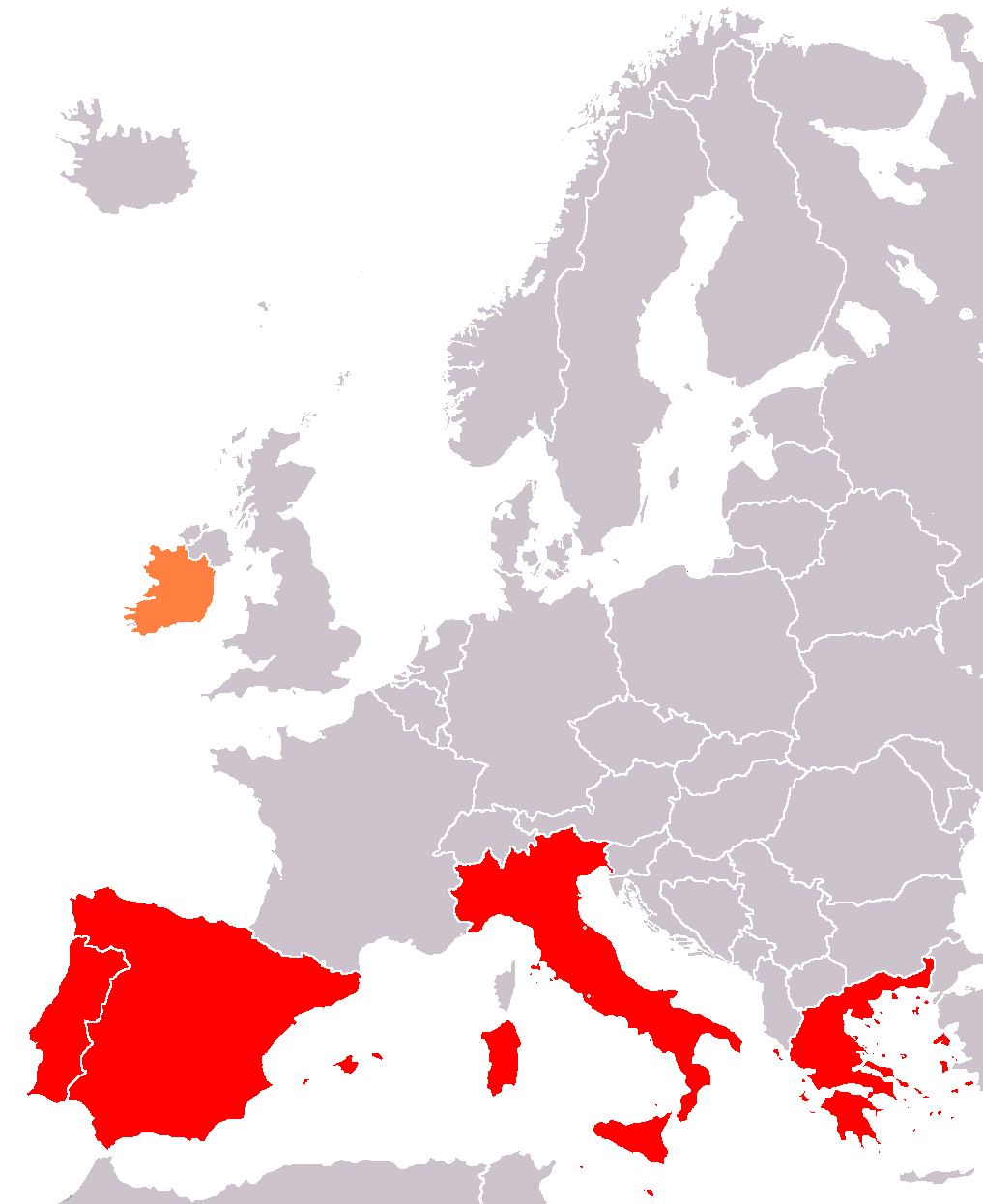
Portugal’s largest listed bank, Banco Espírito Santo, is currently tinkering on bankruptcy after reporting a shattering first half loss of 4.8 billion USD, shares in the bank collapsed by 50 percent on Thursday. Banco Espírito Santo’s historic loss has wiped out the bank’s €2.1 billion capital cushion and leaves its solvency ratios well below those demanded by regulators. The Portuguese bank is now scrambling to raise more capital to stem off a potential bankruptcy. Most of Banco Espírito Santo’s 4.8 billion USD losses have been attributed to bad loans made to the Santo family business Empire, which has been collapsing since early July when one of its companies failed to pay a loan. Moreover, three Espírito Santo holding companies have filed for bankruptcy protection, since then. The requirements to build more financial robust contingency measures, to weather future losses, has also been cited by the Bank as contributing to the Banks massive first half losses. The bank said that at least €856 million was needed to cover possible losses on credits granted without proper internal clearance. Indeed, reckless lending has been made by its banking unit in Angola, called Banco Espírito Santo Angola, more commonly known as BESA, when it made loans equivalent to 220 percent of its deposits. The end result being that the Angolan taxpayers had to cough up €4.2 billion in guarantees in December. Banco Espírito Santo has made little reference in its recent earnings report on how it proposes to mop up the mess it created in Angola. However, it did say that it might have to lose majority control of BESA as part of a planned capital increase. Referring to the Angolan situation a spokesman for the bank said that it would, “reach a solution that meets the interests of the Angolan authorities and that which safeguards Banco Espírito Santo’s interest and those of its shareholders.”

Source: www.periodistadigital.com/
The Espírito Santo family has had a strong hold over Portugal’s economy for more than a century. Following
a Portuguese left wing revolution in 1974 supported by the military, resulting in the family’s assets being nationalized, the Espírito Santo family had managed to rebuild their empire. But family fortune has been reversed in recent years with the latest failed commercial activities. Additionally, last week, Ricardo Espírito Santo Silva Salgado, the family patriarch and former head of Banco Espírito Santo, was arrested in connection with money laundering and a tax evasion investigation resulting in the former bank’s boss being ordered to pay €3 million in bail.

Both the Portuguese central bank and Banco Espírito Santo have reassured shareholders and depositors that the required funds can be raised from private investors. Moreover they are reiterating that depositors’ money was guaranteed and that the bank’s distress should not have a negative impact on the broader financial system. Portugal has contingency cash reserves of approximately €15 billion at its disposal, according to the credit rating agency Moody’s, including €6.4 billion of unused money that had been earmarked to rescue its banks as part of an international bailout negotiated in 2011.

But with Banco Espírito Santo’s share so low analysts now believe that the bank might be vulnerable to a hostile takeover bid.

Over the Pyrenees to France, big losses were also reported on Thursday, July 31. The French banking giant, BNP Paribas, posted a net quarterly loss of 4.3 billion Euros ($5.75 billion) for the second quarter of 2014. However, these losses were not related to bad loans. Indeed, the BNP Paribas trading results had recorded an exceptional expenditure of 5.95 billion Euros for the second quarter. This was linked to breaching US economic sanctions, which resulted in record penalties being imposed on BNP Paribas. The US accused the French bank of moving billions of dollars through the American financial system on behalf of Cuba, Iran, Myanmar and Sudan, all under economic sanctions. BNP Paribas had pleaded guilty in June for breaching US sanctions and agreed to pay 6.6 billion Euros as a penalty, if the case didn’t go to court.
However, excluding US penalties imposed on the French bank for breaching the sanctions, BNP Paribas managed to record a quarterly profit of 1.9 billion Euros, which is up 23.3 percent on the same period a year ago. But, the fine has already had a negative impact on the bank’s second quarter results and it will also lower its contingency reserves. The penalties are not only substantial, they are a record amount imposed on any bank, but they also include a one year ban on certain dollar clearing transactions. A spokesman for the bank said BNP Paribas still had enough cash set aside with central banks and capital to absorb any potential future losses. Additionally, Mr. Bonnafé, CEO for BNP Paribas, said the bank had already paid the entire $8.97 billion fine to U.S. authorities, using its large liquidity pool—cash set aside with central banks and assets accepted as collateral by central banks. 

It was also reported that BNP Paribas had acknowledged using regional banks overseas to process more than $20 billion in financial transactions linked to companies and government agencies in Sudan—at a time when the nation was engaged in what the U.S. and others call genocide. 

The French bank has agreed to set up internal supervisors to ensure that the bank complies with international US sanctions.

Regarding the recent Argentinean sovereign default it’s worth noting that Argentina has remained cut off from the global financial markets. So an Argentine debt default may not be so damaging to the global financial markets this time around. Furthermore, the likely amount of debt default of approximately a few USD billion is significantly less than last times non-payment of its 82 USD billion debt. Therefore, Spanish bank exposure is relatively small this time around. Nevertheless, the Spanish banks have their own big problems; a huge mortgage subprime crisis, turning banks into real-estate agents and high loan defaults where one in four of the work force remains jobless.

Tuesday, 24 June 2014

Where to Keep Your Money?

In an attempt to stimulate the economy following the 2008 financial crisis, central banks around the world have followed expansionary monetary policy with the intended aim of keeping interest rates at record lows. Low interest rates would stimulate business investment, consumption and spur the economy back on the trajectory of growth and prosperity, so the theory goes. Mario Draghi, governor of The European Central Bank (ECB) has even gone one step further, early this month, by deciding to cut the ECB base rates to -0.1 percent, with the unusual consequence of banks now being charged for parking funds with the ECB overnight.

Indeed, parking your money in a bank account is probably now costing you money, after taking into consideration such factors as inflation, which in most cases exceeds the meagre, or now if any, interest paid out on deposits.


So investors have gotten creative by thinking of ways of how to employ their money for a better return. Tap in alternative investments in Google and you are swamped with choices. For example, funds that specialize in alternative investments; Forestry Investments offering 8 to 18 and Farming Investments offering 7 to21 percent per annum. Some investors are even turning their hobbies or interests into potential lucrative investment vehicles and it ranges from art, whisky and wine, classic/vintage cars and even watches. These “passion assets,” have done rather nicely, according to a recent article in the Telegraph. Classic cars were the best- performing alternative investment, returning 257 percent in the seven-and-a-half-year period, while the value of classic watches surged 176 percent and jewellery jumped 146 percent.

But from a practical stance how feasible is it for middle low income earners to invest in a vintage/classic car? Moreover, would they know whether the cylinder head or the catalytic converter on a classic 150,000 USD Ferrari is worn and are those precious stones authentic sapphires and rubies? Most of us don’t possess intricate knowledge of a combustion engine or have a trained eye to determine whether precious stones are indeed precious. Additionally, there is the issue of safely storing the asset and the cost of insuring it.

So for the average investor, or retail investor, their risk taking capacity is far less than wealthy individuals or institutional investors. Furthermore, their knowledge of alternative investments maybe limited. Perhaps for this reason shares and bonds are still the preferred investment vehicles for the retail investor.

Certainly, the recent International Public Offering (IPO) for the TSB shares may underscore the fact that there is still a healthy appetite amongst retail investors for equities, albeit attractively priced IPOs. Apparently, retail demand was high for TSB stocks, which enabled the issuer to price the shares at just above the mid-point of the 220-290 range it had set. What's more, Joe public who invested in TSB through an intermediary/stockbroker, were rewarded a handsome 12 percent in the first day of trading. In other words, investors who applied for 2,000 pounds sterling in TSB shares were allocated 769 shares and if they had sold their shares on the first day of trading they would have banked an easy 240 pounds-that’s a nice play for a few taps on a keyboard, or a two minute dialogue with your stockbroker, particularly, in the era of austerity with pitiful interest rates on deposit accounts. Moreover, you didn’t need to be high up the food chain to be invited to pick the fruits. Indeed, the recent TSB float was also an invitation to treat for the retail investor. Perhaps the only drawback of the recent TSB float is that some retail investors might not have been able to buy as much as they wished from their intermediary/stockbroker due to the large demand from the public. For example, those that invested 2,000 pounds sterling would have received the full allotment amount of 769 shares, but anyone applying over that amount would have received 769 shares plus 30% of the excess they applied for over that amount. So 10,000 pound sterling application was scaled back to 1,692 shares worth £4,399. Bearing this in mind, if you believe that demand from retail investors in a pending IPO is likely to be high it might be prudent to oversubscribe for the shares, since you are unlikely to be allotted the full amount of shares you’re applying for through your intermediary or broker anyway.

And then there are bonds, which is where the investor (the bondholder) purchases debt in exchange for regular interest payments. The bond holder is also promised by the issuer (party receiving the money), to repay the face value of the bond (the principal) at a specified date (maturity date.) It’s supposedly less risky to invest in bonds compared to shares. This is so because in the unfortunate event of the business insolvency/bankruptcy, the bond holder (investor in bonds) comes ahead of the equity shareholders in terms of payouts should the entity be made insolvent.

Most retail investors have bought corporate bonds through funds, which invest in a number of different firms thereby spreading the risk accordingly. However, the downside to investing in bond funds is that you will also need to pay the fund manager fees.

In 2010 the London stock exchange launched a retail bond market, called the Order Book for Retail bonds, known as Orb. The aim of Orb is to encourage more firms to go direct to personal investors with bonds as the minimum investment is lower. The minimum investment for these types of bond starts at just 100 pounds sterling but more usually it is 1,000 pounds sterling.These types of investment, available to retail investors have been dubbed “retail bonds” and can be purchased through your stockbroker/intermediary. Retail corporate bonds have been relatively popular with the retail investor, approximately one billion pound sterling where invested in this type of asset last year.

With pitiful interest rates on saving accounts available today it has been those savers who have thought outside the box and have been savvy enough to assess the risk rewards of their investments have done well for themselves.


Thursday, 12 June 2014

Historically Low Bond Yields!

The main weapon, and the one that Central banks are most comfortable with, was to use low interest rates in the battle to regain stability following the financial crisis.  However, the level of interest rates that is most appropriate is dependent on other factors too such as demand and supply, inflation, period of investment and the level of risk being taken. 

One of the safest investments, before the crisis, was to lend to governments because they were expected to always be able to repay the investor at maturity, whilst lending to companies is perceived to be less safe. The reward or interest rate paid for holding government stock was lower than that gained from holding company bonds before the crisis but reversed when investors feared that their investments in some government stock was now in doubt. Blue chip companies, on the other hand, were perceived as remaining relatively safe. The reward for holding company stock became lower than that demanded for holding some government stock such as that issued by Greece, Italy, Ireland, Portugal and Spain although they are part of the European community.

Central Banks brought the benchmark interest rates down to very low levels in the early stages of the crisis, leaving investors with funds in cash savings earning a very low return on their money. Slowly these investors realised that interest rates would stay low for a long time and some moved their investment profile into higher risk investments where better returns could be achieved.  The less sophisticated investors utilised collective investment vehicles to get the better returns that they needed while the professionals judged that the protection of central Banks may justify investing some portion of their assets into the very high yielding stock such as that issued by the PIIGS countries who were, after all, protected by the ECB.  Whilst this analysis was in doubt for a very long time as the politicians sought to increase the controls over the peripheral countries’ finances with implied threats of removing that protection unless they fell into line, it has proved a great success for these early investors with high yields and capital returns.  

The increase in liquidity created by the central banks of America and United Kingdom had to find a home and income became the main target for these funds.  This was found, not only, in the bonds issued for the debts of the PIIGS but also in the debt of emerging markets.  Issuance in these areas is relatively low and the huge level of funds chasing yield soon pushed prices up and yields down but in many cases yields remained higher than that obtained in the main bond markets in the US, UK and Germany.  The gradual subsidence of fear in the market added to the attractions of these relatively high risk but higher yielding investments.

Most investors in the bond market are and remain the institutions that need to match their liabilities with their assets because they need to ‘know’ that they will have the funds to match the liability when it arises.  These funds will continue to buy bonds with the right maturity and can, at present, justify the low yields by ensuring that they are higher than the low level that inflation is or than cash returns.  The other funds that buy these bonds are those of collective funds who are satisfying the needs of the retail investor for a return that is better than that obtained from cash.
Prices and yields traditionally move in opposite directions with interest rates being the key driver of short term bonds which would be expected to rise along with key interest rates, whereas long term bonds are more affected by inflation expectations and economic growth. If inflation is expected to rise and economies are growing the yields of longer term bonds will rise and prices will fall.

Short term bonds will be impacted by the shape of the yield curve which is a graphical representation of the yields that are currently available at the various maturities.  It is based on the idea that there is a connection between a bond’s maturity date and yield.  Historically shorter term bonds have offered lower yields while long term bonds would produce higher yields so a “normal” yield curve would begin in the bottom left of the graph and arc up towards the top right of the graph.

The ECB bank rate is in the bottom left hand corner at zero which causes all other short term rates to be dragged towards it.  Inverted yield curves have been indicators of a slowdown in economic growth, low inflation and further expectations of interest rate cuts.
The financial crisis has led to a period of low inflation expectations and central bank rates so that yields are low from the short dated bonds through to the long dated issuances.  The demand for yield has resulted in the issuance of more long dated bonds which gives the investor the advantage of covering longer dated liabilities and of giving a higher level of income.

Liquidity has remained in the hands of corporates and retail investors and their demand for low risk yield has created the funds to meet the supply of funds from governments.  The slow rate of growth in profits and weak retail and business demand for goods and services has perpetuated this very low yield environment. The policy being followed, however, is designed to reverse this situation and when it does yields will return to more normal levels.  The US is reining back on this accommodative stance and the UK has already stopped fuelling liquidity with more funds.  In Europe the ECB still has more to do to combat deflation and increase growth so we may expect to see yields rising in the US and UK over the medium term but remain low in Europe.  Subject to inflation remaining low across these areas this should increase the attractions of the US Dollar and Pound when compared with the Euro.

Friday, 6 June 2014

European Central Banks Policy Decisions

The long awaited announcement on monetary policy from the ECB this month was made yesterday. In it Mario Draghi announced a package of measures which are designed to defeat the threat of deflation in the Euro Zone and boost growth.

The measures include a cut in the headline rate of interest or the refinancing rate by reducing it from 0.25% to 0.15%. He also announced that the deposit rate will be reduced by 0.10% from zero to -0.10% and that the banks will be given access to €400bn of funds at a low rate of interest provided the funds are used to lend to small businesses. Finally, they will cease sterilising the new funds put into the market. The package is designed to increase liquidity and reduce the currency thereby increasing inflation and boost the economic expansion.

The cut in the refinancing rate to 0.15% was widely anticipated and is really not expected to make a huge amount of difference to economic growth. However, it will put savers under even more pressure in their hunt for good returns and push them towards more risky investments in order to get those returns particularly as Mario Draghi was not able to give them any encouragement for better returns with his prediction that rates will stay low for an extended period of time. His expectation for inflation, which is currently at 0.5%, is for it to be 0.7% this year followed by 1.1% in 2015 and 1.4% in 2016 and suggests that rates will be low for much of that time. The ECB’s target for inflation is 2.0% or under but such low levels will make it difficult for debts to be repaid and for liquidity to improve. What it will do is give businesses the confidence to seek funding for investment in the knowledge that their business plans will not be hit by the increase in their costs from interest payments. This will tend to reduce the returns they need to obtain in order to justify the investment in the first place.

By reducing the deposit rate that the ECB pays on any excess liquidity that banks leave with the Central Bank to -0.10% they hope to encourage them to take the funds back. They can then seek better returns by lending the money on to consumers and businesses at low interest rates. This may, however, entail the banks reducing their liquidity ratios and breeching the Regulators requirements at a time when they are also being subjected to very high fines from those same Regulators which also reduces their liquidity ratios. There will need to be some support from the Regulators for this policy to work. The amount involved is about €120bn which could have a large impact on liquidity ratios but which will only cost the banks €120m in interest charges. Many analysts doubt whether this announcement will have much effect.

The proposal to make €400bn available in what is to be known as targeted longer term refinancing operations or TLTRO may be more effective in improving liquidity as it gives the banks access to additional funds at a low rate of interest provided they are used for the purpose of supporting businesses. These funds will not be required to be repaid for two years and should give a boost to the economy although it has been likened to the Bank of England’s Funding for lending scheme which it is thought has had little impact on the lending conditions for businesses but which was increased with effect from the beginning of this year. The scheme will be launched in September 2014 with an additional tranche in December 2014. This will be followed by further tranches quarterly from March 2015 to June 2016. The total represents 7% of all outstanding loans to businesses and household excluding mortgages. They will all mature by September 2018 and interest will be paid at the time of maturity and will have been fixed when effected. These are very attractive loans for the banks and should make a difference to liquidity. In addition the withdrawal of sterilisation whereby the Central Bank buys back an equivalent amount of loans will give a further boost to liquidity.

In addition the Central Bank has announced that they are working hard on their preparatory plans to buy back asset-backed securities should that become necessary in the future. This is very close to a full scale quantitative easing programme and would only be considered and activated if inflation stays worryingly low.

Mario Draghi was keen to make the point that the ECB was not yet finished with policy actions that could be taken to combat slow growth and very low inflation. He was also keen to stress that it is necessary for countries to continue to put their own house in order and maintain the packages of reforms that they have all agreed upon during the crisis. He may not be happy to hear about the reforms announced by the Spanish government today to boost their economy and Mr Rajoy’s prospects of re-election next year!

The markets had been anticipating this announcement and there were few surprises in the package. One aim was to reduce the Euro against major currencies and thereby increase inflation and the Euro area’s competitiveness. Since May the Euro has fallen from $1.40 to $1.35 so the travel has been effective, however, the package will also lead to European assets becoming more attractive and could lead to a rising currency again as overseas buyers come in. The rise in the stock market that followed the announcement may be an indication of this trend.

Europe is a major global economic bloc and the relatively flat recovery has contributed to the low rate of global economic growth and the stagnation of equity markets this year. A boost to activity provided by this package could lead to better expectations for growth in profits and earnings which, in turn should justify the current valuations of markets and lead to higher forecast growth rates.

Tuesday, 3 June 2014

Euro Zone's Low Inflation Results for May: Can ECB Stave off Deflation?


This week the ECB will announce their decision on the level of interest rates that are to apply in the Region.  Currently the rate that makes headline news is the refinance rate which stands at 0.25% and which was reduced from 0.5% in November 2013.


The aim of interest rate policy is to maintain inflation at or a little below 2% per annum over a two year period.  Currently the inflation rate for the Euro area is 0.5% with Germany announcing a rate of 0.6% and Italy a rate of 0.4%. The rate is well below the 2% target of the ECB and is causing much concern among policy makers and commentators alike.  It might be asked why we are worried about a low rate of inflation when the authorities have been fighting too high levels since the seventies when inflation was rampant. 
The problem with a low rate of inflation is that it is moving into deflation territory when prices are found to be falling rather than rising.  This is likely to cause economic decisions to be deferred as purchasing goods later may be at a lower price than today.  The result is, at best, stagnation or falling production.  As Japan has found out since it went into a deflationary state in the early nineties this is a very difficult situation to reverse and is one to be avoided.

Commentators believe the current situation of low inflation has been brought about by the European reaction to the financial crisis in 2008.  Led by Germany the approach was to impose austerity measures on those countries in crisis such as the ‘PIIGS’ or Portugal, Ireland, Italy, Greece and Spain.  They also imposed strict regulations on their banks which involved them maintaining a much higher level of capital to support their loan book and to curtail, previously, very profitable high risk activities in their investment banking arms.  The plan was to make the banks capable of supporting themselves in future financial crises so that nation states were not used to bail them out.  The result was to cut back severely on liquidity and reverse economic growth.  Other areas such as the US and UK countered the deflationary influence of these actions by pumping money into their economies through quantitative easing and keeping a very loose monetary policy with historically low interest rates.  Europe was nervous of the inflationary potential of such a policy so did not follow the same path.

One option that they have would be to suspend the Securities Market Program (SMP) and introduce a longer version of its long term refinancing operations (LTRO) program. The SMP was put in place 4 years ago whereby for every euro that the bank spent buying government bonds of the PIIGS it also withdrew an equivalent sum from the banks through interest bearing deposits, thereby offsetting purchases in order to keep the money supply stable.  This process is known as sterilisation because they are actually taking the money back out of the market.

If the ECB stopped this process the money would stay in the banking system and the hope would be that this

excess cash would be lent to other banks thus reducing short term interest rates and encouraging banks to loan to households and businesses.  It would also act as a signal that the ECB is prepared to undertake QE if necessary. However there is no guarantee that the banks will lend more to each other, they could simply just reduce the amount that they borrow from the ECB’s normal facility.

The LTRO program involves the ECB lending money at a very low interest rate to banks within the Eurozone to enable them to buy higher yielding assets as well as to lend to households and businesses.  Previously these loans had to be paid back at time periods of between 3 and 12 months, however the ECB introduced new 3 year LTROs in December 2011 which proved popular. Banks were able to use sovereign bonds as collateral for the loans which benefited those countries where the bond yields had reached unsustainably high levels that jeopardised future repayments.
 
The ECB is still restrained from taking the same path as the US and UK and is seeking alternative solutions such as that described above but only if the economy continues to show little sign of recovering more strongly.

The favourite expectations of what they will do when they announce policy this Thursday is to cut the refinancing rate, currently standing at 0.25% to 0.10% and to charge the banks for leaving excess deposits with the ECB.  This, currently, stands at zero percent but may be cut to –0.10% thus encouraging the banks to make better use of the funds by lending it on to households and businesses.
It is not certain, however, that these moves would be the solution as the rates involved are very small and may not be sufficient to influence banks, businesses and consumers to change their behaviour.  It would have some influence on confidence but this is a two edged sword and could lead to the perception that the ECB is short of ideas and tools with which to tackle the situation.  Such a reaction could hasten the move towards deflation.

One major result of such action could be to reduce the value of the Euro which has been very strong with investors happy to place their funds into a currency that was supported by a vastly improved political environment since the stabilisation of the finances of the PIIGS.  A fall in the Euro would remove the deflationary pressures caused by a strong Euro on imported prices.

Mario Draghi the ECB President has indicated that lower deposit and refinancing rates will be on the agenda this week but that a decision to move rates would depend in large part on the economic statistics that are announced this week.  These include the inflation figures from Germany which has come in at 0.6% for the year with a fall of 0.3% in the month of May and Italy reporting a 0.4% rate of inflation.  The rate of unemployment in the EuroZone, however, fell from 11.8% to 11.7% but with a range of 4.9% in Austria to 26.7% in Greece this will be difficult to control while austerity remains essential in areas like Greece.  Manufacturing activity came in showing growth in the bloc as a whole but France continued to be in contraction.  The statistics continue to show the wide range of performances and the difficulties of having a policy to cover all countries but there remains a need for action to boost activity in, what is a large part of the global economy.

Tuesday, 20 May 2014

Currency Markets for week beginning 19 May 2014


To kick off the week let's take a look at the Euro dollar and Sterling dollar currency pairings, and take a view on where they may be going. Let's start with the Euro - EUR/USD.

The weekly chart below shows a clear uptrend dating back to around August 2013. For a currency that was deemed to be in crisis 18 months ago, the Euro is holding up better than expected over the longer timeframe.

EUR/USD Weekly chart


If we drop to a daily chart the picture is more range bound, we've been going sideways since March. There was a sharp dip on May 8 when Mario Draghi, the president of the European Central Bank, suggested that monetary policy might be loosened to stop prices falling, and also to combat low inflation. The euro has continued to fall since then - an overall 200 points from 1.39 to 1.37. The general consensus seems to be that the currency is a little too strong at the moment, which weakens exports and has inflation way below the level Mr. Draghi would like it to be at 0.7%. The target figure is just below 2%.

EUR/USD Daily Chart


There is a rough support level at around 1.3670, (see the continuous blue line above), which was tested last Thursday, but only temporarily breached before bouncing back. That breach on May 15 was down to lower than anticipated Eurozone economic data. The region grew 0.2% as opposed to the expected 0.4%. This gives even more credence to the possibility of the ECB acting in June to adjust monetary policy, which could see a further fall. From an intraday trading perspective the 4 hour and 1 hour charts are also range bound, but the 15 minute chart is showing some momentum.

What's on the economic calendar for the Euro this week?
Tomorrow (Tuesday 20th) we'll get data for the producer price index early in the day. The industrial sales index figures come out two hours later, at 9am.

Then on Wednesday current account data for transactions in and out of the Eurozone is released at 8am. A high positive figure should be a bullish signal, though this is not flagged as a high impact event.

On Thursday we'll see a Business climate report at 7.45am, showing the current state of French business conditions. At 8.30am the German Purchasing Managers Index report comes out, followed at 9am by the same PMI data for the Eurozone as a whole.

On Friday you'll see some GDP and business climate data from Germany, with Retail Sales, wage inflation and trade balance data from Italy. And also remember that the elections for the European parliament are happening this week.

None of the economic indicators above are seen as big ticket events, but nonetheless, it's worth keeping an eye out to see what impact they have. The outlook for the Euro going into June though looks decidedly bearish, especially if Mr. Draghi acts on the hints he's so far given us.

Moving on to Sterling now - GBP/USD
The weekly chart shows a strong uptrend for Cable, perhaps that should be no surprise as the UK is touted as the fastest growing economy in Europe this year. Yes, it dropped a bit last week, but is showing signs of a revival today.

GBP/USD weekly chart


If you're a purely technical trader this is an uptrend to die for on the weekly timeframe. And it's quite well reflected at the daily level, below. There's a support level around 1.6750, which has been tested and bounced off.

GBP/USD daily chart


If you drop down to the lower timeframes it's been a bit range bound, but with a slight spike up early this afternoon. But there's quite a lot coming up for Sterling on the economic calendar this week, and they're events that could trigger some significant movement.

Tomorrow sees the Consumer Price Index being released at 9.30am. This is basically an indicator of inflation and purchasing trends, and could have a market impact. At the same time we'll see Producer Price Index and Retail Price Index reports.

On Wednesday it hots up even more, with the official Bank of England decision on what will happen to interest rates being released. I would expect rates to remain unchanged, but if that's not the case watch out!

Then on Thursday at 9.30am we have GDP data coming out, another potential high impact event. Although the UK is experiencing recovery, and employment figures are looking better, productivity hasn't been rising at a proportionate rate. So this could be significant data.

It's a quiet day for Sterling on Friday. Again, we have the European elections this week, and if UKIP does well the markets will no doubt react, which way of course is another question. But right now the outlook for sterling looks bullish.  

The longer term outlook suggests that if support holds at around 1.6660 (next level of support below the one I've drawn above), that Sterling will continue to be bullish. With economic growth forecast at around 3.8% this year and continuing into 2015, the rising momentum could take us to around 1.73, though some opinion sees the market as overbought, which tempers this estimate.

Darren Winters 19/05/14

Monday, 12 May 2014

Euro Zone Businesses Off To Bumper Start In Second Quarter

Gazing at the recent financial results of some of Europe’s prized companies you could easily jump to the conclusion that Europe is slowly grinding its way out of one of the most severe recessions in living memory. BMW, the German car maker first quarter results reported a net profit rise of 11 percent in the first quarter of 2014 on strong sales and the, Deutsche Lufthansa AG also reported a narrowing of its losses in the first quarter.  Moreover, just a few days ago the French global telecommunications company announced its first quarter results posting revenues of Euro 2,963 million, which equated to a 0.3 per cent increase in its profits. Inditex, the Spanish fashion giant reported also stronger sales and profits in the first quarter of 2014. Sales in the six weeks to March had increased by 12 per cent, according to a spokesperson from the company.

So, on the deck it appears that the 9.5 trillion euro economy has weathered the storm and the worst is now behind it. The recent released business climate index underscores this view, indicating that all remains stable at 0.39 in March, compared with 0.36 in February, according to a recent Reuters report.  A further poll of purchasing managers and retail sales data also indicates a further strengthening of the euro zones fragile recovery, as reported in the FT on March 6th. Indeed, the euro zone recovery is fragile and there maybe some storm clouds gathering. One main concern is that the growth in corporate profits in the euro zone is too heavily reliant on exports to emerging markets, rather than domestic consumption.  Take, for example the two companies above BMW and Index, they tend to typify the problem.  The bulk of BMW sales increases in its first quarter came from Asia a rise of 21 percent and sales to China rose by 25 percent, while sales in the euro zone remained sluggish.  Index, the Spanish clothing retailer also experienced a 5 percent increase in sales across its stores, but in Europe sales were actually down 0.5 per cent. 

Where will sales be generated when china’s economy starts slowing down, already economic indicates are suggesting that the Chinese economy is decelerating at a faster pace,  than what was previously thought, albeit still posting a growth 7.7 percent GDP in the final quarter of 2013. 
Despite the massive monetary economic expansion policy adopted by the European Central Bank (ECB) to stave off a depression following the 2008 financial meltdown unemployment, in parts of the Euro zone, particularly in the south remain at great depression levels. Incidentally, these miserably high levels of unemployment are exerting severe downward pressure on wages. It was recently reported that some workers in the Spanish southern province of Andalusia where accepting as little as three euros an hour. Meanwhile, if we factor into the equation the increases in the basic essential in energy costs and food stuffs it become blatantly apparent that real wages in the Euro zone are actually falling.  So with domestic consumption in the euro zone mashed and a looming slowdown in China’s economy where are the improving sales revenues going to come from in the second and third quarter for the euro zone companies?
The sluggish domestic demand has also got the ECB worried not about inflation, but actually deflation, falling prices.  The problem here is that when prices fall consumers have no incentive to buy, since why do so when sometime in the future the goods/services will be cheaper.  Businesses also have no incentive to invest. Deflation is a self-fulfilling vicious circle capable of bringing the economy to the brink.  No surprise then that deflation is also on the ECB’s radar.

If cost push inflation became an issue, caused by say a rise in energy, food cost, then an economic policy of raising interest rates could be adopted by the ECB to combat inflation. But doing so in a sluggish economic environment could be further headwinds for the fragile EU economic recovery.  Because higher interest rates would increase the costs of borrowing, increase the cost of financing debt and deter business investments-this is something the ECB would not want to do if it wants to stimulate the economy and create employment. 
The Euro zone is heavily depended on bank lending to finance consumer spending, business investment and employment. Despite this lending by euro-zone banks to the private sector fell 2.2% on the year in March, this followed a similar decline in the month before that in February. The rational for this new credit crunch is that the financial crisis of 2008 has burdened bank balance sheets with bad loans, which has diminished banks’ appetite to lend. ECB President Mario Draghi recently responded by saying that the problem of banks unwillingness to lend has, “motivated the ECB to launch new measures, later in the year, especially designed to encourage banks to lend to firms and households.”
It seems that the ECB is more concerned about consumer sending and business investment rather than deflation.  That could translate to more quantitative easing, purchasing of bonds to drive interest rates down. So the euro zone economy is not out of the woods yet. The high levels of unemployment, sluggish domestic consumption, the credit squeeze, the potential slow down in China and the geopolitical situation in Ukraine could all be a drag on future earnings and profits of companies in the Euro zone. With euro zone stock markets currently hovering around six year highs maybe the bulls have jumped the gun.


Blogger Templates