Ads 468x60px

About Me


Darren Winters is a self made investment multi-millionaire and successful entrepreneur. Amongst
his many businesses he owns the number 1 investment training company in the UK and Europe.
This company provides training courses in stock market, forex and property investing and since
the year 2000 has successfully trained over 250,000 people.


Showing posts with label Central Banks. Show all posts

Tuesday, 24 June 2014

Where to Keep Your Money?

In an attempt to stimulate the economy following the 2008 financial crisis, central banks around the world have followed expansionary monetary policy with the intended aim of keeping interest rates at record lows. Low interest rates would stimulate business investment, consumption and spur the economy back on the trajectory of growth and prosperity, so the theory goes. Mario Draghi, governor of The European Central Bank (ECB) has even gone one step further, early this month, by deciding to cut the ECB base rates to -0.1 percent, with the unusual consequence of banks now being charged for parking funds with the ECB overnight.

Indeed, parking your money in a bank account is probably now costing you money, after taking into consideration such factors as inflation, which in most cases exceeds the meagre, or now if any, interest paid out on deposits.


So investors have gotten creative by thinking of ways of how to employ their money for a better return. Tap in alternative investments in Google and you are swamped with choices. For example, funds that specialize in alternative investments; Forestry Investments offering 8 to 18 and Farming Investments offering 7 to21 percent per annum. Some investors are even turning their hobbies or interests into potential lucrative investment vehicles and it ranges from art, whisky and wine, classic/vintage cars and even watches. These “passion assets,” have done rather nicely, according to a recent article in the Telegraph. Classic cars were the best- performing alternative investment, returning 257 percent in the seven-and-a-half-year period, while the value of classic watches surged 176 percent and jewellery jumped 146 percent.

But from a practical stance how feasible is it for middle low income earners to invest in a vintage/classic car? Moreover, would they know whether the cylinder head or the catalytic converter on a classic 150,000 USD Ferrari is worn and are those precious stones authentic sapphires and rubies? Most of us don’t possess intricate knowledge of a combustion engine or have a trained eye to determine whether precious stones are indeed precious. Additionally, there is the issue of safely storing the asset and the cost of insuring it.

So for the average investor, or retail investor, their risk taking capacity is far less than wealthy individuals or institutional investors. Furthermore, their knowledge of alternative investments maybe limited. Perhaps for this reason shares and bonds are still the preferred investment vehicles for the retail investor.

Certainly, the recent International Public Offering (IPO) for the TSB shares may underscore the fact that there is still a healthy appetite amongst retail investors for equities, albeit attractively priced IPOs. Apparently, retail demand was high for TSB stocks, which enabled the issuer to price the shares at just above the mid-point of the 220-290 range it had set. What's more, Joe public who invested in TSB through an intermediary/stockbroker, were rewarded a handsome 12 percent in the first day of trading. In other words, investors who applied for 2,000 pounds sterling in TSB shares were allocated 769 shares and if they had sold their shares on the first day of trading they would have banked an easy 240 pounds-that’s a nice play for a few taps on a keyboard, or a two minute dialogue with your stockbroker, particularly, in the era of austerity with pitiful interest rates on deposit accounts. Moreover, you didn’t need to be high up the food chain to be invited to pick the fruits. Indeed, the recent TSB float was also an invitation to treat for the retail investor. Perhaps the only drawback of the recent TSB float is that some retail investors might not have been able to buy as much as they wished from their intermediary/stockbroker due to the large demand from the public. For example, those that invested 2,000 pounds sterling would have received the full allotment amount of 769 shares, but anyone applying over that amount would have received 769 shares plus 30% of the excess they applied for over that amount. So 10,000 pound sterling application was scaled back to 1,692 shares worth £4,399. Bearing this in mind, if you believe that demand from retail investors in a pending IPO is likely to be high it might be prudent to oversubscribe for the shares, since you are unlikely to be allotted the full amount of shares you’re applying for through your intermediary or broker anyway.

And then there are bonds, which is where the investor (the bondholder) purchases debt in exchange for regular interest payments. The bond holder is also promised by the issuer (party receiving the money), to repay the face value of the bond (the principal) at a specified date (maturity date.) It’s supposedly less risky to invest in bonds compared to shares. This is so because in the unfortunate event of the business insolvency/bankruptcy, the bond holder (investor in bonds) comes ahead of the equity shareholders in terms of payouts should the entity be made insolvent.

Most retail investors have bought corporate bonds through funds, which invest in a number of different firms thereby spreading the risk accordingly. However, the downside to investing in bond funds is that you will also need to pay the fund manager fees.

In 2010 the London stock exchange launched a retail bond market, called the Order Book for Retail bonds, known as Orb. The aim of Orb is to encourage more firms to go direct to personal investors with bonds as the minimum investment is lower. The minimum investment for these types of bond starts at just 100 pounds sterling but more usually it is 1,000 pounds sterling.These types of investment, available to retail investors have been dubbed “retail bonds” and can be purchased through your stockbroker/intermediary. Retail corporate bonds have been relatively popular with the retail investor, approximately one billion pound sterling where invested in this type of asset last year.

With pitiful interest rates on saving accounts available today it has been those savers who have thought outside the box and have been savvy enough to assess the risk rewards of their investments have done well for themselves.


Thursday, 12 June 2014

Historically Low Bond Yields!

The main weapon, and the one that Central banks are most comfortable with, was to use low interest rates in the battle to regain stability following the financial crisis.  However, the level of interest rates that is most appropriate is dependent on other factors too such as demand and supply, inflation, period of investment and the level of risk being taken. 

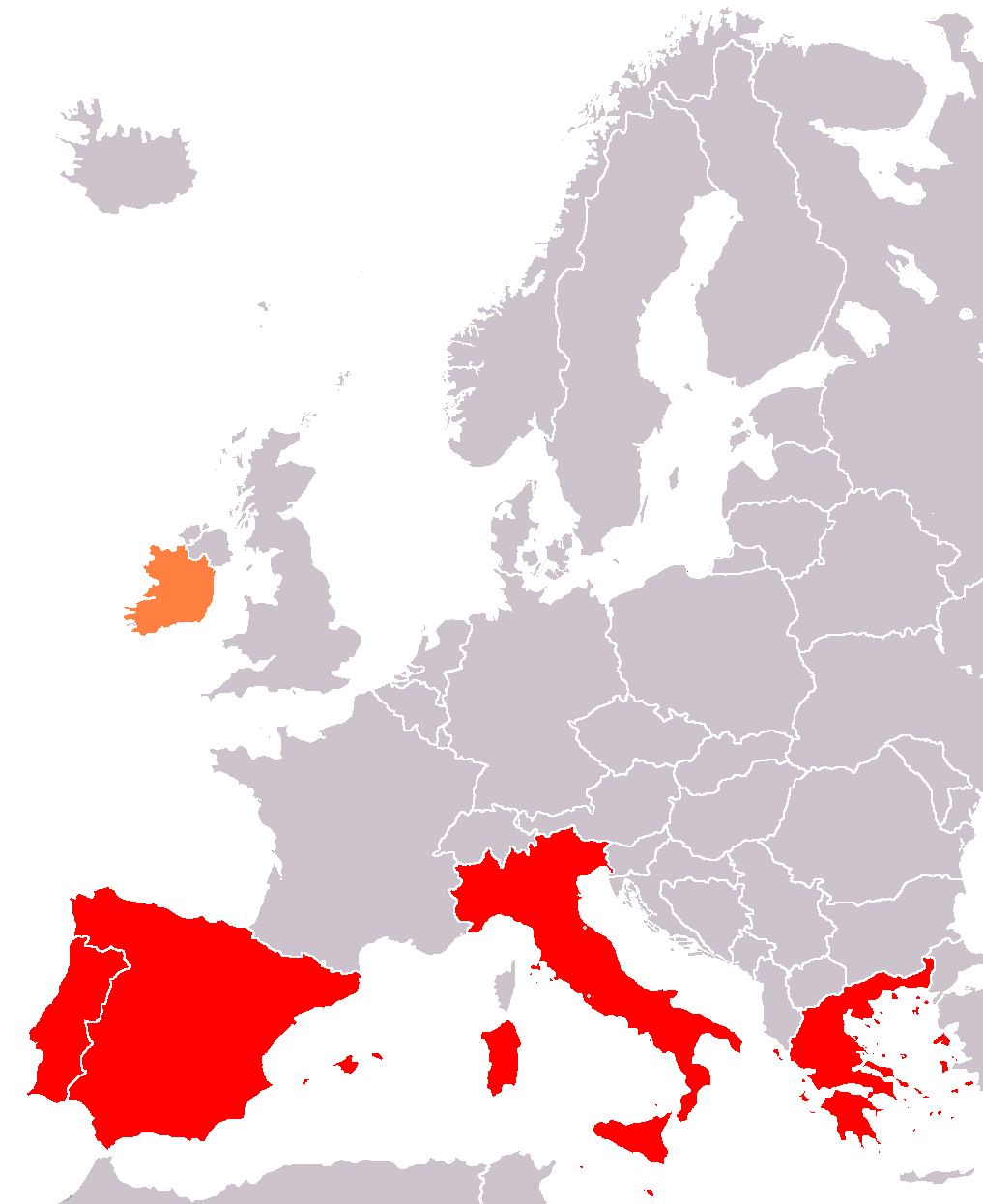
One of the safest investments, before the crisis, was to lend to governments because they were expected to always be able to repay the investor at maturity, whilst lending to companies is perceived to be less safe. The reward or interest rate paid for holding government stock was lower than that gained from holding company bonds before the crisis but reversed when investors feared that their investments in some government stock was now in doubt. Blue chip companies, on the other hand, were perceived as remaining relatively safe. The reward for holding company stock became lower than that demanded for holding some government stock such as that issued by Greece, Italy, Ireland, Portugal and Spain although they are part of the European community.

Central Banks brought the benchmark interest rates down to very low levels in the early stages of the crisis, leaving investors with funds in cash savings earning a very low return on their money. Slowly these investors realised that interest rates would stay low for a long time and some moved their investment profile into higher risk investments where better returns could be achieved.  The less sophisticated investors utilised collective investment vehicles to get the better returns that they needed while the professionals judged that the protection of central Banks may justify investing some portion of their assets into the very high yielding stock such as that issued by the PIIGS countries who were, after all, protected by the ECB.  Whilst this analysis was in doubt for a very long time as the politicians sought to increase the controls over the peripheral countries’ finances with implied threats of removing that protection unless they fell into line, it has proved a great success for these early investors with high yields and capital returns.  

The increase in liquidity created by the central banks of America and United Kingdom had to find a home and income became the main target for these funds.  This was found, not only, in the bonds issued for the debts of the PIIGS but also in the debt of emerging markets.  Issuance in these areas is relatively low and the huge level of funds chasing yield soon pushed prices up and yields down but in many cases yields remained higher than that obtained in the main bond markets in the US, UK and Germany.  The gradual subsidence of fear in the market added to the attractions of these relatively high risk but higher yielding investments.

Most investors in the bond market are and remain the institutions that need to match their liabilities with their assets because they need to ‘know’ that they will have the funds to match the liability when it arises.  These funds will continue to buy bonds with the right maturity and can, at present, justify the low yields by ensuring that they are higher than the low level that inflation is or than cash returns.  The other funds that buy these bonds are those of collective funds who are satisfying the needs of the retail investor for a return that is better than that obtained from cash.
Prices and yields traditionally move in opposite directions with interest rates being the key driver of short term bonds which would be expected to rise along with key interest rates, whereas long term bonds are more affected by inflation expectations and economic growth. If inflation is expected to rise and economies are growing the yields of longer term bonds will rise and prices will fall.

Short term bonds will be impacted by the shape of the yield curve which is a graphical representation of the yields that are currently available at the various maturities.  It is based on the idea that there is a connection between a bond’s maturity date and yield.  Historically shorter term bonds have offered lower yields while long term bonds would produce higher yields so a “normal” yield curve would begin in the bottom left of the graph and arc up towards the top right of the graph.

The ECB bank rate is in the bottom left hand corner at zero which causes all other short term rates to be dragged towards it.  Inverted yield curves have been indicators of a slowdown in economic growth, low inflation and further expectations of interest rate cuts.
The financial crisis has led to a period of low inflation expectations and central bank rates so that yields are low from the short dated bonds through to the long dated issuances.  The demand for yield has resulted in the issuance of more long dated bonds which gives the investor the advantage of covering longer dated liabilities and of giving a higher level of income.

Liquidity has remained in the hands of corporates and retail investors and their demand for low risk yield has created the funds to meet the supply of funds from governments.  The slow rate of growth in profits and weak retail and business demand for goods and services has perpetuated this very low yield environment. The policy being followed, however, is designed to reverse this situation and when it does yields will return to more normal levels.  The US is reining back on this accommodative stance and the UK has already stopped fuelling liquidity with more funds.  In Europe the ECB still has more to do to combat deflation and increase growth so we may expect to see yields rising in the US and UK over the medium term but remain low in Europe.  Subject to inflation remaining low across these areas this should increase the attractions of the US Dollar and Pound when compared with the Euro.
 
Blogger Templates