Ads 468x60px

About Me


Darren Winters is a self made investment multi-millionaire and successful entrepreneur. Amongst
his many businesses he owns the number 1 investment training company in the UK and Europe.
This company provides training courses in stock market, forex and property investing and since
the year 2000 has successfully trained over 250,000 people.


Showing posts with label European Community. Show all posts

Thursday, 12 June 2014

Historically Low Bond Yields!

The main weapon, and the one that Central banks are most comfortable with, was to use low interest rates in the battle to regain stability following the financial crisis.  However, the level of interest rates that is most appropriate is dependent on other factors too such as demand and supply, inflation, period of investment and the level of risk being taken. 

One of the safest investments, before the crisis, was to lend to governments because they were expected to always be able to repay the investor at maturity, whilst lending to companies is perceived to be less safe. The reward or interest rate paid for holding government stock was lower than that gained from holding company bonds before the crisis but reversed when investors feared that their investments in some government stock was now in doubt. Blue chip companies, on the other hand, were perceived as remaining relatively safe. The reward for holding company stock became lower than that demanded for holding some government stock such as that issued by Greece, Italy, Ireland, Portugal and Spain although they are part of the European community.

Central Banks brought the benchmark interest rates down to very low levels in the early stages of the crisis, leaving investors with funds in cash savings earning a very low return on their money. Slowly these investors realised that interest rates would stay low for a long time and some moved their investment profile into higher risk investments where better returns could be achieved.  The less sophisticated investors utilised collective investment vehicles to get the better returns that they needed while the professionals judged that the protection of central Banks may justify investing some portion of their assets into the very high yielding stock such as that issued by the PIIGS countries who were, after all, protected by the ECB.  Whilst this analysis was in doubt for a very long time as the politicians sought to increase the controls over the peripheral countries’ finances with implied threats of removing that protection unless they fell into line, it has proved a great success for these early investors with high yields and capital returns.  
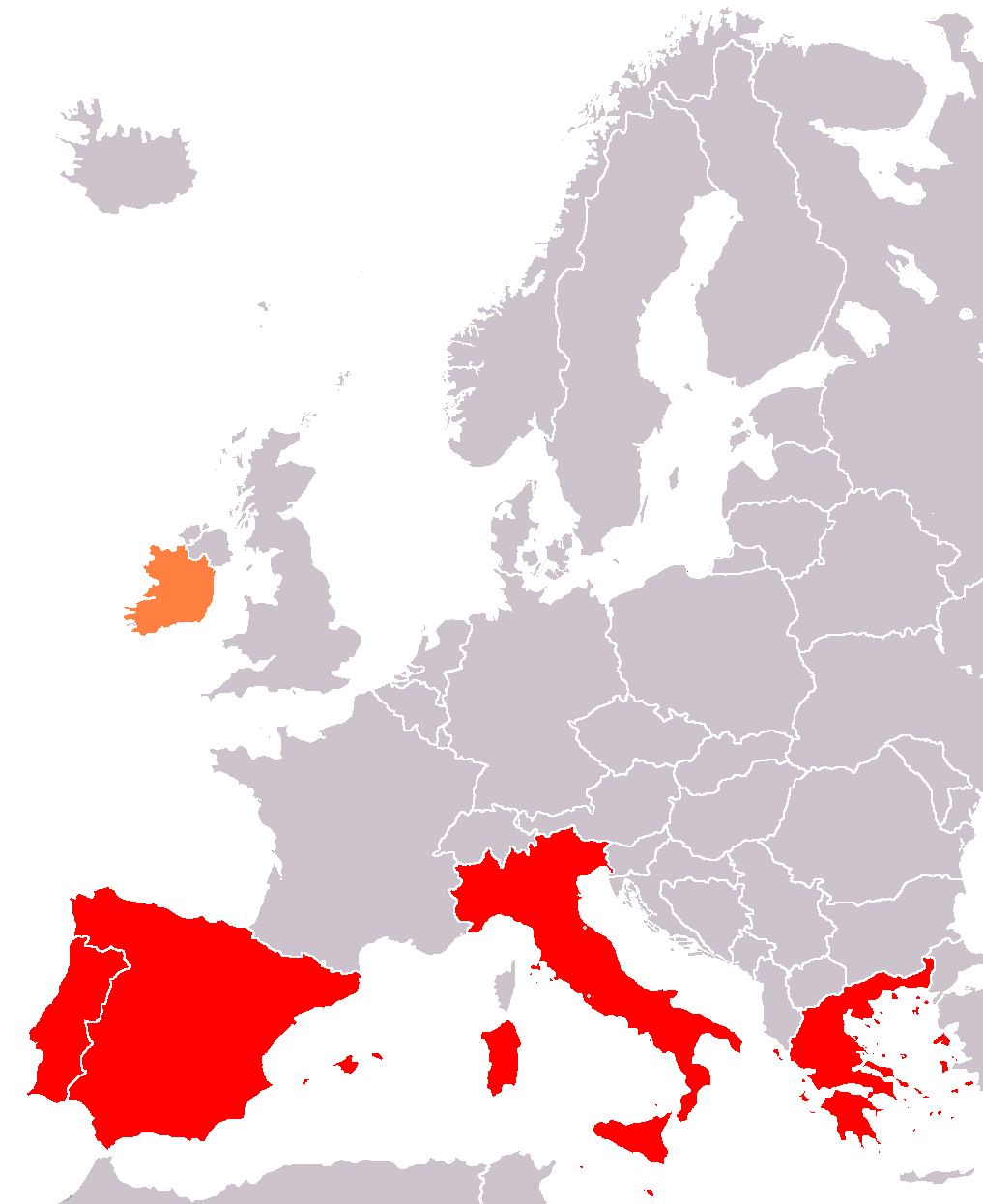
The increase in liquidity created by the central banks of America and United Kingdom had to find a home and income became the main target for these funds.  This was found, not only, in the bonds issued for the debts of the PIIGS but also in the debt of emerging markets.  Issuance in these areas is relatively low and the huge level of funds chasing yield soon pushed prices up and yields down but in many cases yields remained higher than that obtained in the main bond markets in the US, UK and Germany.  The gradual subsidence of fear in the market added to the attractions of these relatively high risk but higher yielding investments.

Most investors in the bond market are and remain the institutions that need to match their liabilities with their assets because they need to ‘know’ that they will have the funds to match the liability when it arises.  These funds will continue to buy bonds with the right maturity and can, at present, justify the low yields by ensuring that they are higher than the low level that inflation is or than cash returns.  The other funds that buy these bonds are those of collective funds who are satisfying the needs of the retail investor for a return that is better than that obtained from cash.
Prices and yields traditionally move in opposite directions with interest rates being the key driver of short term bonds which would be expected to rise along with key interest rates, whereas long term bonds are more affected by inflation expectations and economic growth. If inflation is expected to rise and economies are growing the yields of longer term bonds will rise and prices will fall.

Short term bonds will be impacted by the shape of the yield curve which is a graphical representation of the yields that are currently available at the various maturities.  It is based on the idea that there is a connection between a bond’s maturity date and yield.  Historically shorter term bonds have offered lower yields while long term bonds would produce higher yields so a “normal” yield curve would begin in the bottom left of the graph and arc up towards the top right of the graph.

The ECB bank rate is in the bottom left hand corner at zero which causes all other short term rates to be dragged towards it.  Inverted yield curves have been indicators of a slowdown in economic growth, low inflation and further expectations of interest rate cuts.
The financial crisis has led to a period of low inflation expectations and central bank rates so that yields are low from the short dated bonds through to the long dated issuances.  The demand for yield has resulted in the issuance of more long dated bonds which gives the investor the advantage of covering longer dated liabilities and of giving a higher level of income.

Liquidity has remained in the hands of corporates and retail investors and their demand for low risk yield has created the funds to meet the supply of funds from governments.  The slow rate of growth in profits and weak retail and business demand for goods and services has perpetuated this very low yield environment. The policy being followed, however, is designed to reverse this situation and when it does yields will return to more normal levels.  The US is reining back on this accommodative stance and the UK has already stopped fuelling liquidity with more funds.  In Europe the ECB still has more to do to combat deflation and increase growth so we may expect to see yields rising in the US and UK over the medium term but remain low in Europe.  Subject to inflation remaining low across these areas this should increase the attractions of the US Dollar and Pound when compared with the Euro.

Monday, 2 June 2014

Britain's Place in the EU in the Wake of Election Results


The recent elections for our MEPs has provided not only members of parliament in Westminster pause for more thought but also those in the European Parliament.  With Marinne Le Penn’s French National Front gaining 25% of the vote, Beppe Grillo’s anti-establishment Five Star party gaining 21% of the Italian vote and UKIP 27% of the UK vote there is a clear indication of discontent among voters for the status quo.  Voters on the continent are probably only objecting to austerity while those in the UK are looking for a chance to have a debate and vote on whether or not the UK stays as part of the European Union.

It does, however, open up the possibilities of some reforms and may give David Cameron the opportunity to gain some reforms in order for him to win an in/out referendum vote in 2017.  The chances of this happening have also gone up as UKIP may be a creditable opposition after 2015 and at the expense, maybe, of the LibDems who are pro Europe.  The Labour party will also have to respond to this issue with, perhaps, support for the referendum in 2017.
The UK joined the European Community in 1973 and voted in a referendum in 1975 with 66% of votes cast in favour of joining. It is generally believed that most yes votes thought that they were electing to join an economic Union and not an ever developing political Union.  It came at a time when the UK was performing badly economically, and was seen as the ‘sick man’ of Europe.  The European Union was created in 1993 following the Maastricht Treaty when the UK agreed to join but without committing to a single currency.

The main advantage for this was to gain access to a community of some 500m people without the imposition of trade duties and other trade barriers.  This has been the case, however, it has not been all one way. In March 2014, the continent exported £19.1bn to the UK and the UK exported £13.1bn to the continent.  As a comparison, the UK’s exports to non-European countries were £13.6bn and imports were £15.7bn.  However, in joining the EU the UK lost a proportion of its markets to its previous trade partners in the Commonwealth due to import restrictions and duties imposed by the EU on non EU countries.  There is no guarantee that any of these markets could be regained if we exited the Union but better terms for export contracts would be a major consideration.  The quality of our manufacturing since the 1970s has improved dramatically and UK industry become a serious competitor and supplier of equipment to many of the growing global markets and industries.  This would only be enhanced if trade barriers could be reduced.  There would, obviously be a threat to our exports to the continent but with the continent exporting more to the UK than the UK to the continent there should be room for a favourable outcome to trade negotiations with our former partners.  As our industry is often in niche products they are not so easily replaced by customers particularly where they are of a high quality.

An area at risk should we exit the EU would be the global companies that have set up in the UK because of our membership of it and the favourable trade terms that we receive.  It would be essential to negotiate good terms with our former partners if we are to keep some of this industry, however, there is more to the decision by these companies to set up in the UK than just trade terms.  These would include taxation, subsidies, transport, political stability and an educated work force.  All of these are within our powers to maintain and an improvement would be an advantage to our indigenous companies as well as to foreign companies. In addition there may be other alternatives such as the European free trade area (EFTA) either as a member of the EU or, like Switzerland, a non EU member.
As one of the stronger members of the Union the UK has been a net contributor to the budget with only one year when we were not a net contributor.  Since joining we have paid £401bn into the budget and received £134bn in rebates and aid.  On these figures alone, there would be a large benefit to the UK’s exchequer. 

For many British people the main problem of membership is the plethora of regulations and directives that are governing our lives.  Many of these rules would probably have been introduced by the UK government anyway and may not be rescinded if we left the Union.  The main issue for most people would, however, be that any legislation governing our lives in the future will have been approved by Parliament and will be seen to be the more legitimate for that.  We are told that we have benefitted from our membership of the Union because of the agreements that have been made and which cover all countries that are members.  These include, inter alia, legislation on climate change, on cross border controls, on food quality, on health and safety and on immigration.  Co-operation between the various agencies in each country has been strengthened by membership of the Union to the benefit of everybody.  Many will say though that all of that could have happened through international negotiations anyway and would not disappear on an exit from the Union.

The declared ambition of the EU is for ever closer political union and the introduction of the Euro was a step towards that.  Many think the next logical step is for a fiscal union with a central tax authority.  The problems in many of the southern countries of the bloc are thought to have been, at least, partly caused by their difficulties in collecting the taxes due to them.  More control by the larger northern countries is thought to be necessary in order to avoid the problem re-occurring in the future.  This, however, involves giving up more sovereignty which will not be welcome by most countries and years of negotiation would lie ahead for that to happen.  If Britain left the EU, that would not be a problem. 
 
Blogger Templates