Ads 468x60px

About Me


Darren Winters is a self made investment multi-millionaire and successful entrepreneur. Amongst
his many businesses he owns the number 1 investment training company in the UK and Europe.
This company provides training courses in stock market, forex and property investing and since
the year 2000 has successfully trained over 250,000 people.


Showing posts with label Coal. Show all posts

Thursday, 19 June 2014

Energy Series: Natural Gas


Natural gas has been known to man since 1,000 years before Christ. The Oracle of Delphi in ancient Greece was built around a flame that arose from a seepage of natural gas. It is thought that the gas was set alight by lightening but the ancient Greeks were puzzled and amazed by it and believed it came from divine intervention. The Chinese were able to transport gas arising from seepage with the use of bamboo pipe lines. They then, in 500 BC, used the flames created to boil sea water for drinking water.

Natural gas was found and identified in America in 1626 when the French discovered the local indigenous population lighting gas seepage around Lake Erie. In 1821 William Hart noticed bubbles of gas coming to the surface and dug a 27 foot well in Fredonia New York to obtain a larger flow. A self-styled Colonel Drake dug the first natural gas and oil well in the Lake Erie area when he dug down just 69 feet in 1859.

Manufactured gas was produced from coal and first commercialised in 1785 in Britain when it was used to light houses and streets. The Americans followed in 1816 in Baltimore and also used the gas to light the streets.

Gas continued to be used as a source of light throughout the 19th century until Robert Bunsen invented the Bunsen burner which opened up the opportunity to use gas for cooking and heating. Pipelines were then built and gas was used in many more applications with the development of gas cookers, water heaters, boilers and many uses in manufacturing and processing plant.

Natural gas is a commodity that trades in a similar way to oil and is the third largest physical commodity futures contract by volume in the world. Natural gas is a fossil fuel found in deep underground rock formations formed when layers of buried animals, gases and plants buried beneath the ground are exposed to intense heat over many thousands of years. It is a non-renewable source of energy and a bi-product of oil production, however it has its own uses for everyday life in heating and cooking and its price is very much driven by supply and demand. During cold winters the price will rise as demand to heat homes and businesses rise and although summer is usually the period when demand is low, excessively hot periods will also cause the price to rise as air conditioning units are turned up high. Natural gas prices are also affected by adverse weather conditions such as hurricanes as most of the production occurs in and around the Gulf of Mexico and the rigs will be closed down for safety reasons once storm warnings are in force.

Natural gas is a hydrocarbon and once extracted it contains other products such as propane, butane and helium that are extracted from the methane in order to make it commercially viable. It is considered to be an efficient and environmentally friendly fuel as it is the cleanest burning fossil fuel. One barrel of oil has approximately six times the energy content of natural gas.

Almost a quarter of the United States energy consumption is made up from natural gas and the US consumes approximately 25% of world production. It is transported around the country by pipelines. The US is a net importer of natural gas consuming all of its own production and importing the balance mainly from Canada. The first country to extract natural gas in 1825 was the United States.

It is estimated that there is 50 years’ supply of natural gas in the world and, in addition there are 900 trillion cubic metres of unconventional gas available for extraction of which only 180 trillion may be recoverable. The world’s consumption in 2015 will be 3.4 trillion cubic metres of gas per year meaning that world stocks should be sufficient to last 100 years.

Natural gas is the cleanest of fossil fuels, is easy to obtain and to transport, and it is therefore being used more and more by nations in order to keep down their carbon emissions and the cost of energy. It is difficult to store natural gas unless it has been converted to liquid natural gas and huge tankers are necessary in order to transport it around the world.

Natural gas has hit the headlines recently as fears have grown over the dispute between Russia and Ukraine which could threaten supplies to Europe. Russia stopped supplies to Kiev following a dispute over Ukraine’s unpaid gas debts of almost $5 billion which it is refusing to pay. Nearly a third of Europe’s gas demand is met through imports from Russia and it is estimated that half of this is fed through Ukraine. This is not the first time that supplies through the area have been halted following similar instances in 2006 and 2009. Approximately 15% of Europe’s demand is dependent upon Russian gas delivered via Ukraine. If Europe is unable to satisfy its needs from this source they could need to buy higher priced liquefied natural gas in order to meet demand. However Europe is currently sitting on its biggest gas inventories in 3 years with their storage facilities operating at around 65% full at present which is currently sufficient to meet demand.

Natural gas can be traded either directly, or through Exchange Traded Funds (ETFs) or through the shares of companies that process natural gas such as Centrica in the UK.

Natural gas is traded internationally and every week the US reports its gas inventory levels on a Thursday afternoon compared to the previous week. Natural gas is measured in cubic feet and is usually reported in billions of cubic feet (or Bcf).

Natural gas is traded on the New York Mercantile Exchange (NYMEX), US Futures Exchange, Intercontinental Exchange (ICE) and Multi Commodity Exchange (MCX) and the price is quoted in cents per million Btu (mmBTU). A futures contract for natural gas would be traded in 10,000 million British thermal units (Btu) with a tick size of 0.1 cents per mmBTU or $10 per contract. The price of natural gas can be extremely volatile and it is therefore wise to use a good risk management strategy if trying to trade it.


Wednesday, 18 June 2014

Energy Series: Coal

Coal, as we all know, is formed from the decomposition of vegetation. Most coal was formed in the carboniferous period in tropical swamps in the land masses that were close to the equator. They are initially turned into peat by bacteria which eat everything and consume all the oxygen. The bacteria die from the lack of oxygen caused by their own activity and the peat that is left remains so unless it is covered by sediment in an anaerobic environment. As continents drifted and climates changed the peat was driven ever deeper and covered by sediment. With rock crushing it and geothermal heat cooking it the peat turned into coal. The quality of coal is determined by the type of vegetation growing from where it originates, the depth it is buried at, and the pressure and temperature where it is buried as well as the time period that the coal has been forming.

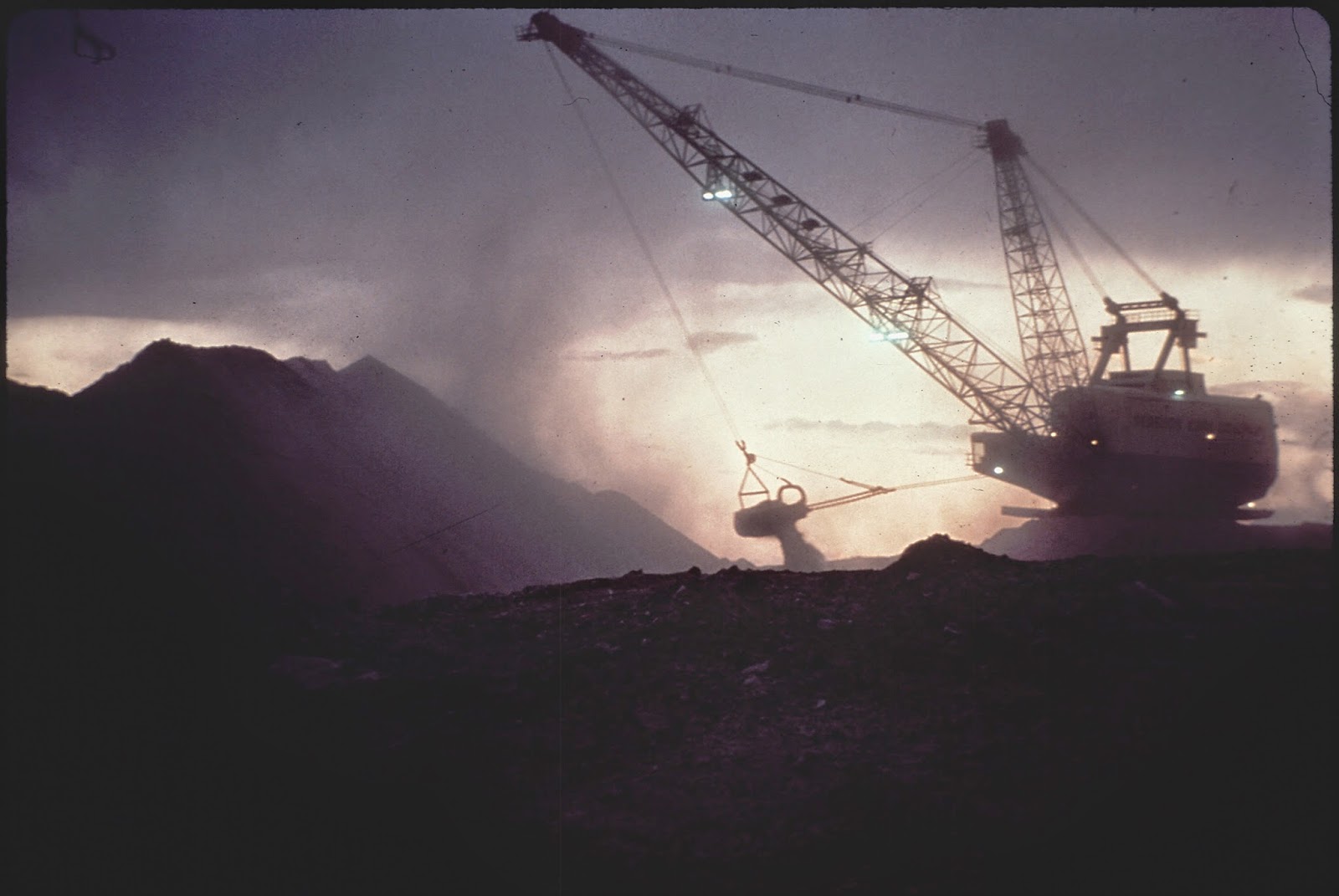
Coal is mined from open pits where the coal strata reaches the surface and from deep mines with shafts driven deep into the earth’s crust. Britain developed the mining techniques that were used in the 18th century and these were further developed in the 19th and 20th centuries with new techniques increasing the production of coal from more previously inaccessible seams. Coal gradually became replaced by oil from the 1860s and natural gas and electricity. To get at coal seams miners have been known to blast away entire mountains. This permanently alters the landscape and can choke up streams with sediment.

Coal is black or brownish and is basically carbon plus some other elements such as sulphur, hydrogen, oxygen and nitrogen. It has always been used as an energy source and was the most important fuel from which electricity was produced. It was developed as a primary source of energy in the industrial revolution and was used for domestic fuel and in industry for smelting and other things.

Coal is the largest source of energy for the production of electricity worldwide and is also the largest producer of carbon dioxide releases. The level of emissions of carbon dioxide in 1999 was 8,666 million tonnes and in 2011 was 14,416 million tonnes. As natural gas has replaced coal for the generation of electricity so the emission levels have reduced and in the first quarter of 2012 the US recorded the lowest carbon dioxide emissions for the first quarter of any year since 1992. The UN climate agency has declared that most of the world’s coal resources should remain underground to avoid catastrophic global warming.

Coal is a global industry and is mined in 50 countries, the biggest being USA, Russia, China and India, and it is used in more than 70. There is an estimated 861 billion tonnes of proven worldwide coal reserves which it is believed is sufficient to last around 112 years at current production rates. Coal is used for the generation of electricity, steel production, manufacturing of cement and also as a liquid fuel. It is also used in the manufacture of paper, alumina refineries and in the pharmaceutical and chemical industries. By products of coal are tar and ammonia gas and among the products made from these are aspirin, dyes, fibres, plastic, soap and solvents.

Approximately 30% of primary energy is supplied through coal and 41% of global electricity generation. Demand for coal is particularly high in countries such as India and China whereas in the US there is a surplus of coal and relatively low demand.

It is possible to transport coal quickly and easily and safely by road, sea and rail. Although most coal is used in the country in which it is mined. It is the transportation that makes up a large proportion of its price. Australia has always been one of the world’s largest producers of coal although Indonesia has recently become the largest exporter.

Coal, however, has a number of health issues such as the waste materials generated in the form of ash and sludge, the acidic rain caused by sulphur released when the coal is burned, the issue of particulates and interference with water tables. Miners can also suffer from the dust generated getting into their lungs and causing pneumoconiosis and early death.

Man has found ways to reduce the environmental impact of coal by cleaning coal by mixing crushed coal with a liquid. Some power generators use flue gas desulpherisation equipment known as scrubbers to reduce the amount of sulphur emitted from their smoke stacks. The smogs in Britain during the fifties and sixties were largely eradicated with the use of cleaner fuel, as was acid rain which had been killing forests not just in the country burning the coal but in those that were downwind of it. Coal is cheap and is used by many of the developing countries to produce the electricity that they require. The smogs in China are a repeat of those in the West in the middle of the last century

Coal can be traded through the use of ETFs (Exchange Traded Funds), coal contracts or directly through purchasing the shares of coal producing companies. Coal futures are designed for consumers and producers of coal in order to manage the risk of price fluctuations. Speculators will also attempt to take advantage of any supply and demand imbalances.

Currently, coal is an essential fuel for the world and many argue that it is needed to back up the use of renewable energy which is a less reliable generation.

Coal futures are traded on the New York Mercantile Exchange (NYMEX) under the symbol QL. Each contract is 1550 tons of coal on a minimum incremental price fluctuation of 1 US cent per ton ($15.50 per contract).

The price of coal is a lot more stable than many other commodities such as oil and gas and has been historically the cheaper priced fuel, hence why it is favoured in countries with high energy intensive industries where they have access to either their own or affordable imported supplies.


Thursday, 12 June 2014

The New Investor Friendly India

Earlier this week the president of India, Mr. Pranab Mukherjee, addressed the Indian Parliament. This was on the occasion of the first sitting of parliament following the elections that brought the new Prime Minister Narendra Modi to power with a landslide victory. The emphasis of  the presidential speech was on economic reform and a return to double digit growth, something that has been lacking in the last two years, which have seen less than 5% growth apiece. According to Mukherjee, putting the economy back on track is of paramount importance. 


How will this be achieved? Through initiatives like the introduction of a goods and service tax, encouragement of foreign direct investment, making the tax regime more business friendly, controlling inflation, and investing in infrastructure, just for starters. The infrastructure promise includes the pledge that by 2022 every family will have a good home with a constant electricity supply. The railway will be upgraded, and new roads and airports will be built.


Investment, both domestic and foreign, will lead to job creation. With 10 million people entering the workforce every year, that will be music to the ears of so many of the younger voters who wanted an end to the rule of the Congress Party. After being in power for 55 of the last 67 years, and most recently for a continuous 10 year period, the Congress Party is perceived as being responsible for the recent poor economic performance, in spite of almost double digit growth in four of those years. It is also seen as a party riven with corruption.

Controlling inflation is seen as high priority. Consumer Price Inflation hit a high of almost 9% in April, due mostly to higher food prices. The volatility of food prices has been linked to a poor supply chain – namely warehouse shortages, food hoarding and black market activity, unpredictable supplies of vegetables, and the generally weak infrastructure. These ‘bottlenecks’ will be addressed by the new government. Meanwhile, in an effort to contain inflation the Reserve Bank of India has raised interest rates three times since last September.


The coal sector will be one of the first industries to be targeted in a drive to improve efficiency and output in a ‘transparent’ way. Corruption and bureaucracy have seen mining output decrease, and India is a large importer of coal even though it has plenty of it available at home. One suggested plan is to break up the state owned Coal India company into smaller independent units, and also to open up the sector to private investment, including foreign investment. Coal is a cheap and potentially plentiful form of energy from India’s perspective, so improving the efficiency of its production is an urgent task.

India is also expected to lift restrictions currently limiting online retailers like Amazon from selling their own products in the country. Freeing up the ecommerce space is predicted to boost a contribution of 4% to economic growth by 2020, as opposed to 1% at the moment. Opening up the economy to online giants like Amazon is expected to benefit local manufacturers and suppliers as they form partnerships with Amazon and others to source cheaper local products. The decision to press ahead with this more liberal approach may well be announced in the first budget of the new government in July.

Another area for improving the ratio of foreign direct investment is in companies in the defence sector, where figures of up to 100% have been quoted. In the last ten years foreign investment has accounted for only $5billion of a $322 billion dollar overall investment in the sector. Private Indian companies have only been permitted to operate in the defence arena since 2002. Although the need for investment exists, there is some resistance to allowing such a high level of participation by foreign investors. If they are to be allowed to invest it should be conditional on a transfer of technology to India and training of Indian employees, said a source from Larsen and Toubro, a large Indian private defence contractor.

It is one thing to talk a good reform package, but can Mr. Modi deliver? He was credited with  great success as Chief Minister of Gujarat, where under his stewardship the economy grew and the state prospered. He even saw to it that the state had electricity 24 hours a day. Whether he can apply that golden touch to the economy of India as a whole remains to be seen. His image is one of a man who is corruption free, which no doubt helped him get re-elected as Chief Minister of Gujarat three times.

Responding to the president’s speech on Wednesday, Mr. Modi said "It is the collective responsibility of all elected representatives to fulfil the faith reposed in us by the electorate. I reassure the house that all the promises made in the President's speech will be delivered." He went into detail, citing enhancement of agricultural productivity as one step on the path, and encouraging the wider use of organic farming methods in the whole of the North East of the country, with the aim of entering the global market in organic produce.

Elimination of poverty will be reduced through more educational opportunities and the lowering of food prices. Even currently skilled workers should be given more chances to improve their marketability through further education. This also leads to improved social status, and the improvement of the social infrastructure in India is another important factor in the resurgence of the country. Mr. Modi admitted that the Gujarat model could not be applied across India, saying that “Different states offer different lessons and we plan to implement the best examples.”

The new government is in the honeymoon phase, and euphoria is high. There can be no underestimating the challenge facing Mr. Modi though as he begins his reformation. The mood has been optimistic and was certainly reflected in a surge in the stock markets once the election results were almost certain. Mr. Modi’s first budget in July should give a clearer indication of just how he intends to begin the great Indian comeback, and also give a clue as to just how investor friendly India might turn out to be. 
 
Blogger Templates